
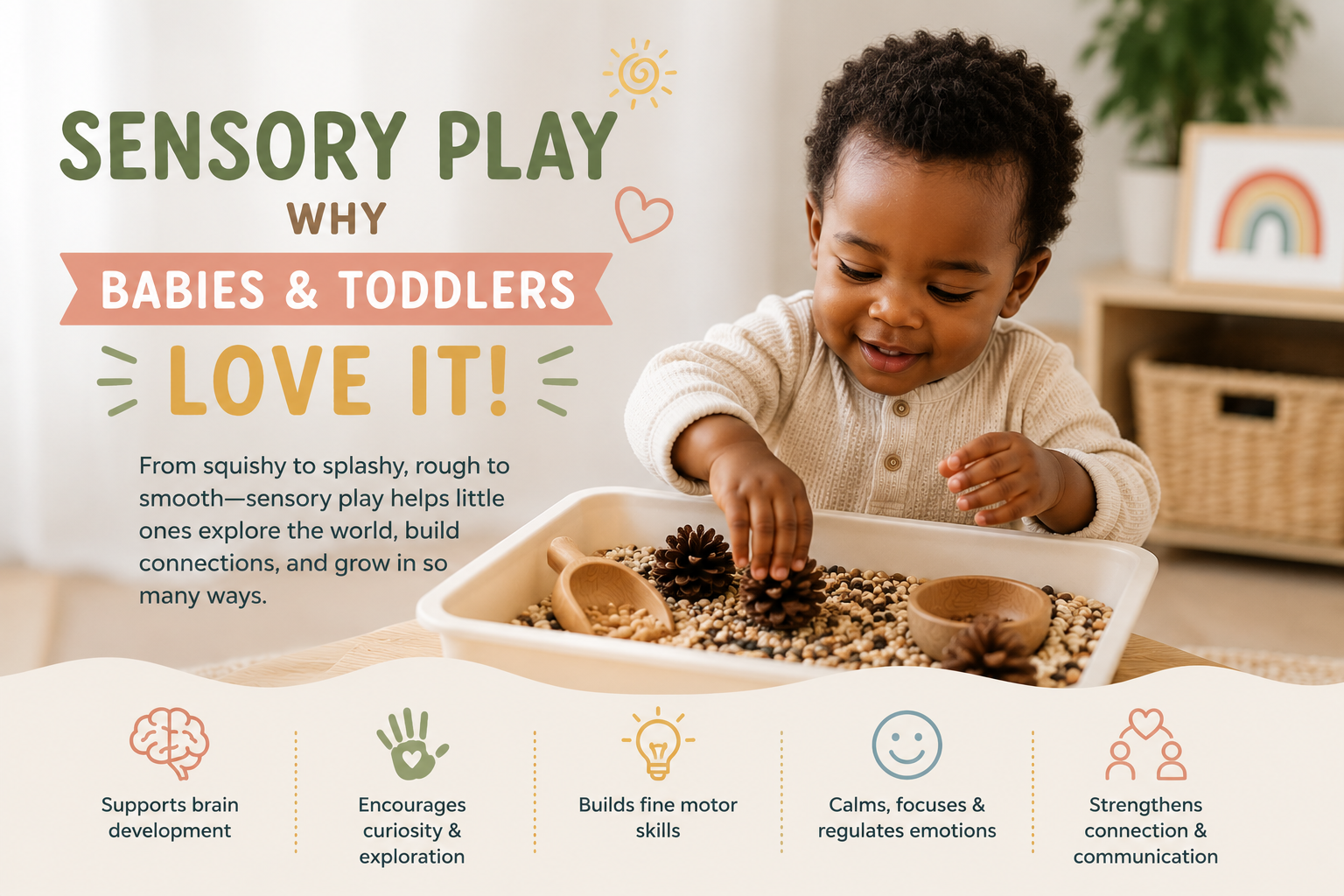
As babies grow into curious infants and toddlers, one of the most powerful ways to support their development is through sensory play. Sensory play may sound complicated, but at its heart, it is simply giving children opportunities to explore the world through their senses: touch, movement, sound, sight, smell, and even taste in safe, age-appropriate ways.
What Is Sensory Play?
Sensory play includes any activity that stimulates a child’s senses and encourages exploration. This could be:

- water play
- finger painting
- listening to sounds
- playing with dough
- scooping and pouring
- exploring different textures
- transferring objects between containers
- messy play with safe household ingredients
These simple experiences help children build neural pathways that support learning, coordination, emotional regulation, language development, and independence.
Most importantly, sensory play allows children to learn at their own pace through curiosity and discovery.
Why Sensory Play Matters for Babies and Toddlers
1. It Supports Brain Development
Young children learn best when they use most of their senses through hands-on experiences. Every time a child squishes, pours, shakes, grabs, or transfers objects, their brain is making important connections.
Simple sensory activities help develop:
- coordination
- concentration
- fine motor control
- problem-solving skills
- language development
- early mathematical thinking
What looks like “just play” is actually meaningful learning.
2. It Helps with Emotional Regulation
Many children – toddlers especially – seek sensory input when they are overwhelmed, tired, frustrated, or overstimulated.
Activities like water play, scooping rice, kneading dough, or transferring objects can have a calming effect on the nervous system. These repetitive movements often help them to regulate their emotions and to feel more settled.
3. It Encourages Independence in a Gentle Way
One of the beautiful things about sensory play is that because it requires some adult supervision, it still encourages independent exploration without forcing separation. A parent can remain present while allowing the child freedom to investigate and experiment – a beautiful addition to the Attachment Parenting model.
This builds confidence naturally:
“I can explore safely because I know my caregiver is nearby.”
That balance of connection and independence is incredibly valuable during the early years.
4. It Strengthens Fine Motor Skills
Many simple sensory activities strengthen the small muscles in children’s hands and fingers that are later needed for:
- self-feeding
- dressing
- drawing
- writing
- and eventually using scissors and other tools
Activities such as:
- using tongs
- peeling stickers
- spooning beans
- squeezing sponges
- transferring pom-poms
all support fine motor development through play.
Sensory Play Does Not Need to Be Complicated
Parents often feel pressure to create elaborate activities, but meaningful sensory play can happen with simple household items.

Busy Hands Growing Minds –
Activities Booklet
by BusyLittleHands.studio
for FREE today!
Some easy ideas include:
- homemade play dough
- oats, rice or salt in a tray
- a bowl of water and cups
- posting baby socks into an empty tissue box
- transferring activities using spoons or tongs
- laundry basket filled with items made of different fabrics
The goal is not perfection or entertainment. The goal is exploration, connection through everyday household activities and chores, and learning about the world around them.
Following Your Child’s Lead
One of the most important aspects of sensory play is observing the child rather than directing every moment.
Some children love messy textures, while others prefer dry (cleaner) activities first.
Some spend ten minutes pouring water repeatedly, while others move quickly between different activities.
That is all normal.
Children learn best when they feel safe, respected, and free to explore according to their own developmental readiness.
Final Thoughts
Sensory play is not about creating perfect activities or filling every moment with stimulation. It is about giving babies and toddlers opportunities to experience the world in meaningful, hands-on ways while feeling safe and supported.
Sometimes the simplest moments — pouring water, scooping rice, squeezing dough, helping in the kitchen — become the experiences that help children grow the most.
🧮 Play. 💡 Learn. 🌱 Grow.


Download your
Busy Hands Growing Minds – Activities Booklets
by BusyLittleHands.studio for FREE today!
References
The Benefits of Sensory Play For Your Child

Written by Elsabé — mother of four (including twins) and passionate advocate for early childhood development, with 20+ years of hands-on experience supporting children’s growth and development in home and school-based settings. You can find more of her work over at BusyLittleHands.studio