
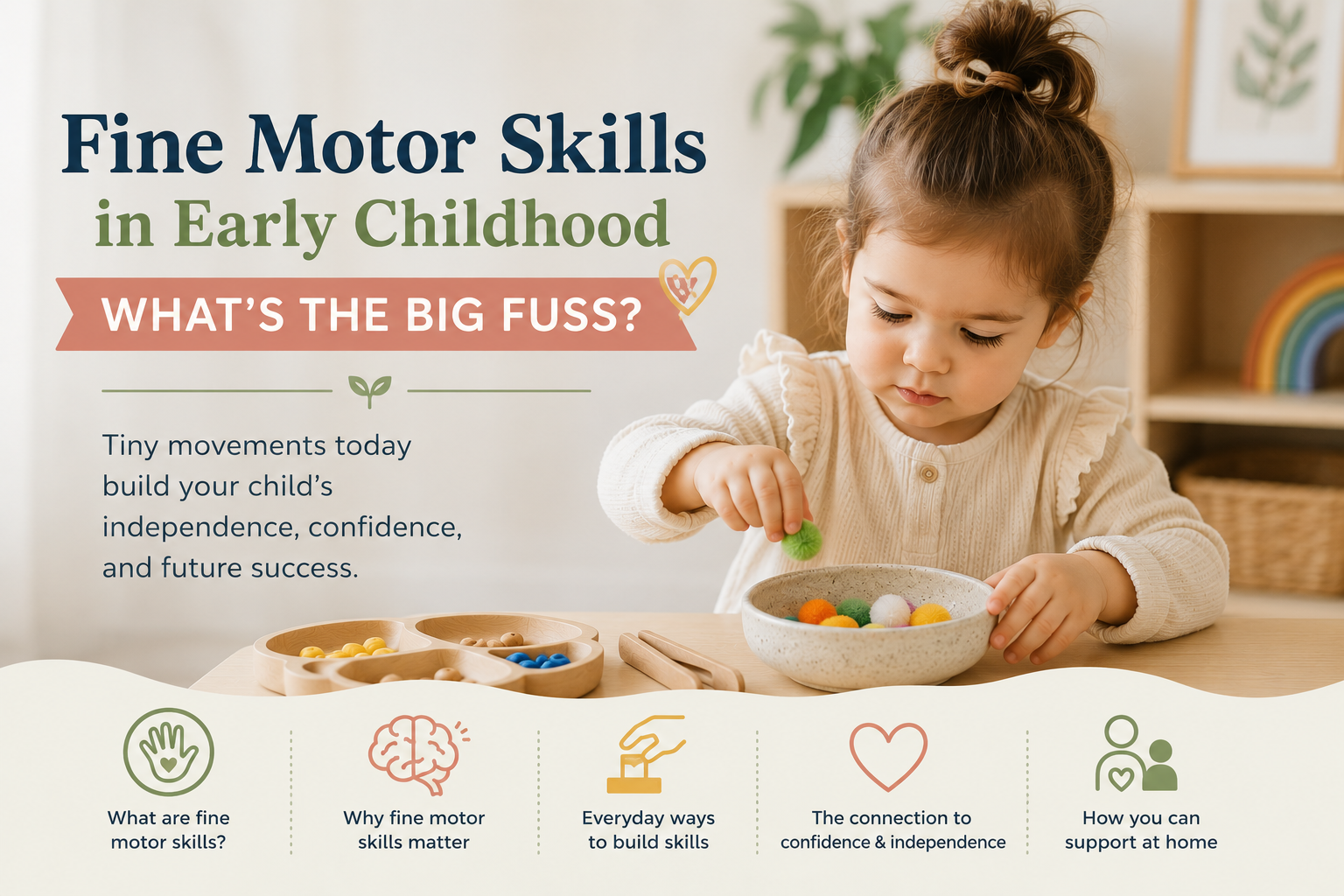
Fine motor skills are one of the most important foundations for early childhood development.
When little hands are constantly grasping, squeezing, stacking, twisting, and exploring— they are using movements that build strength, coordination, and confidence.
That is why understanding fine motor development helps parents to choose the right activities and toys to support their child naturally through play.
What Are Fine Motor Skills?
Fine motor skills involve the small muscles of the hands, fingers, and wrists working together with the eyes (hand–eye coordination). It is these precise movements that allow children to complete everyday tasks independently.
Common fine motor tasks include:
- Picking up small objects with thumb and forefinger (pincer grasp)
- Buttoning, zipping, and fastening clothing
- Holding a crayon, pencil, or marker
- Using utensils during meals
- Turning pages in a book
- Cutting with scissors
These skills develop gradually through repeated hands-on experiences.
Why Fine Motor Skills Are Important
1. Builds Independence in Daily Life
Fine motor development directly impacts everyday independence. For example, simple routines like dressing, eating, and opening containers rely on coordinated hand movements.
When children can:
- Feed themselves confidently
- Open snack containers
- Zip their jacket or pants
- Button their own shirt
- Put on their shoes
they develop autonomy, confidence, and a strong sense of “I can do it myself” as a result. Independence is a major milestone in early childhood and closely linked to a healthy self-esteem.
2. Strengthens Brain Development
Activities that require precision and control—like threading beads, completing puzzles, or manipulating small objects—support:
- Task persistence
- Problem-solving skills
- Focus and concentration
- Early Executive Functioning skills
Which means this type of play stimulates important neural pathways in the brain. That is why fine motor development is not just a physical skill — it’s deeply connected to cognitive growth as well.
3. Improves Hand–Eye Coordination
One of the best ways to develop fine motor skills, is by doing activities that also require hand-eye coordination.
When a child is pouring, stacking, placing shapes into sorters, and using tongs, the eyes are required to guide the hands. This coordination not only supports academics later on, but also areas like sports, art, and daily functional tasks.
4. Supports Emotional Regulation
Fine motor activities can be very calming. Through repetitive movements such as squeezing playdough, lacing, or sorting small items, children are able to focus their energy and regulate their emotions.
For children who are easily frustrated or overstimulated, structured fine motor play can provide them with a safe and predictable outlet.
5. Supports Handwriting and School Readiness
Long before a child can form letters on a piece of paper, they must first build:
- 💪🏽 Hand strength
- ✍🏽 Pencil control
- 🖐🏽 Wrist stability
- 👐🏽 Bilateral coordination (using both hands together)
Strong fine motor skills start with play in the early years and make learning to write less frustrating and more enjoyable once they are developmentally ready for it. They also support drawing shapes, coloring within lines, and completing early academic tasks.
Signs Your Child May Need More Fine Motor Practice
Every child develops at their own pace. However, you may want to offer extra support if you notice your child:
- Has difficulty getting dressed using buttons, zips, or snaps
- Shows frustration with puzzles or building tasks
- Struggles to hold crayons or small objects
- Avoids coloring or drawing activities altogether
The good news? Playful practice can significantly improve these skills.
Easy Fine Motor Activities at Home
If you’re wondering how to improve fine motor skills at home, the answer is to start simple and use what you have. You don’t need expensive materials or tools.

Busy Hands Growing Minds –
Activities Booklet
by BusyLittleHands.studio
for FREE today!
Try:
- Melting ice cubes with droppers and lukewarm water
- Transferring dry beans with kitchen tongs or spoons
- Sorting and stacking small containers or blocks
- Tearing newspaper or old magazine pages
- Playing with modelling clay or playdough
- Threading pasta onto string or wool
- Playing with stickers
You’ll find that short, daily practice makes a big difference over time.
Toys That Strengthen Fine Motor Control
The following types of toys are specifically designed to strengthen little hands and are a great addition to everyday household items and activities:
1. Busy Boards and Busy Books
These are especially helpful for toddlers learning dressing skills, because they are great for practicing buttons, zips, buckles, snaps, and laces.
2. Lacing and Threading Toys
Perfect for developing hand strength, coordination, and concentration.
3. Peg Boards and Stacking Toys
Encourage precision, bilateral coordination, and visual-motor integration.
4. Fine Motor or Sensory Tool Sets (Tongs, Droppers, Scoops)
Ideal for sensory play and transferring activities.
5. Chunky Puzzles and Shape Sorters
Support pincer grasp development and problem-solving skills.
When choosing fine motor toys, look for options that are:
- Durable
- Open-ended (where possible)
- Age-and developmental stage appropriate
- Designed to encourage active participation rather than passive play
Final Thoughts
Fine motor skills are about more than just handwriting, because they also support everyday independence, brain development, emotional regulation, confidence and school readiness.
By intentionally incorporating fine motor activities into your child’s daily play, you are in fact helping your child build essential lifelong skills.
🧮 Play. 💡 Learn. 🌱 Grow.

References
Fine Motor Skills Five Steps to Function – Alder Hey Children’s Hospital Trust

Written by Elsabé — mother of four (including twins) and passionate advocate for early childhood development, with 20+ years of hands-on experience supporting children’s growth and development in home and school-based settings. You can find more of her work over at BusyLittleHands.studio