
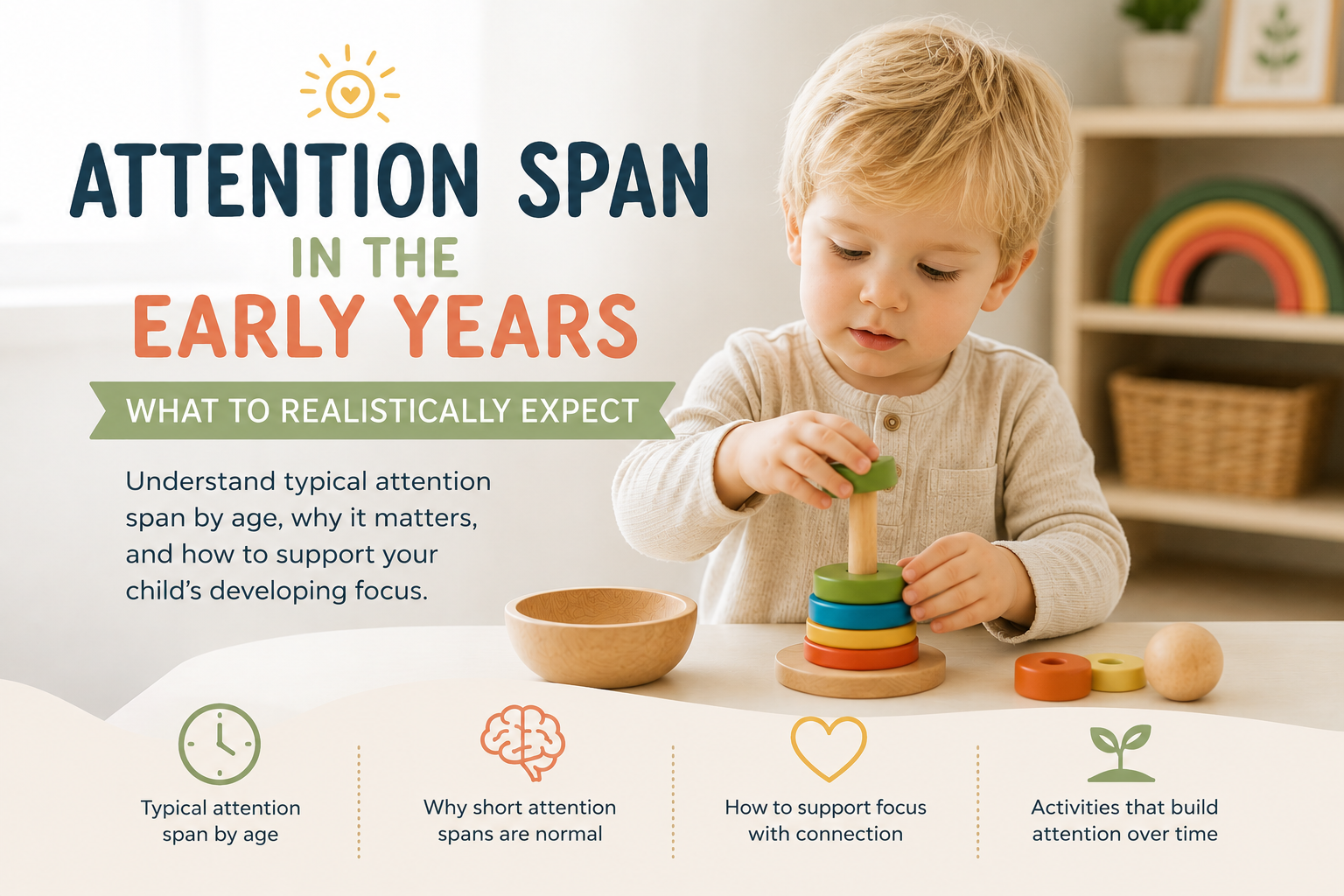
Many parents worry about their toddler’s attention span, when they jump from one toy to another or struggle to sit through an activity. Social media often shows young children sitting quietly for long learning sessions but having worked with little ones for 20+ years, I can tell you it not at all realistic.
Short attention spans are completely normal and to be expected in early childhood.
After all, young children are still developing the brain systems responsible for focus, impulse control, and working memory. That is why understanding what focus really looks like at different ages can help parents support learning in ways that match their child’s development.
Average Attention Span by Age
One guideline commonly used by educators is:
Attention span ≈ 2–5 minutes per year of age
This rule is not exact, but it does provide a helpful framework for understanding what is typical.
Toddler Attention Span Chart
1–2 years old
2–6 minutes of focused play
2–3 years old
4–10 minutes of attention
3–4 years old
6–15 minutes of concentration
4-6 years old
8-20 minutes of concentration
For example, a two-year-old who spends ten minutes building blocks is showing excellent focus for their age, while another two-year-old who only spends 5 minutes is also completely acceptable.
You’ll often find that children focus longer on activities they have an interest in and really enjoy, especially during open-ended play.
Why Young Children Have Short Attention Spans
Several developmental factors influence attention in early childhood:
Brain Development Is Still Growing
The brain areas responsible for sustained attention develop slowly throughout childhood. Skills like planning, impulse control, and concentration are part of Executive Function, which gradually strengthen with age. This means kids simply cannot focus for long periods yet, even if they wanted to.
Curiosity Naturally Interrupts Focus
Young children are wired to notice new sights, sounds, smells and textures. What looks like distraction to us as adults, is often healthy curiosity and exploration in kids.
Exploration Leads to Learning and Skill Development
Curiosity naturally leads to exploration, which means they’ll switch activities frequently while exploring their environment through hands-on play.
A child who moves between sorting shapes, transferring beans, and pretending to be a chef is actually learning about the world around them and developing multiple skills at once, including:
- creativity
- problem-solving
- sensory awareness
- motor development
Signs Your Child’s Attention Span Is Developing Normally
Many kids demonstrate healthy focus during independent play, even if they struggle during structured activities.
Your child may have a healthy attention span if they:
- Become deeply engaged in play they enjoy
- Complete short tasks with encouragement
- Repeat favorite activities many times
- Return to the same toys repeatedly
- Explore new ideas with curiosity
When Should Parents Be Concerned About Attention?
Short attention spans are rarely a problem in toddlers.
However, parents may want to talk with a professional if a child:
- Cannot focus on any activity for more than a minute or two by the age of 3 years
- Shows extreme impulsivity that disrupts daily life
- Struggles to engage in play at all
In some cases, ongoing attention challenges may be related to conditions such as Attention Deficit Hyperactivity Disorder (ADHD), although diagnosis usually occurs later in childhood.
How to Improve Focus in Toddlers
While attention develops naturally over time, there are things parents can do to help improve their child’s attention span:
Keep Activities Short
Short bursts of play or learning are far more effective than long, stretched-out sessions. Plan activities that match your child’s developmental stage.
Follow Your Child’s Interests
Notice what naturally captures your child’s curiosity and attention and build play opportunities around those interests.
Reduce Playroom Clutter
Too many toys can overwhelm young children and reduce their ability to concentrate. Rotating toys and limiting visible options can really help to improve their engagement, and make ‘old’ toys seem ‘new’ again.
Allow Movement During Play
Toddlers and preschoolers will focus even better when movement is allowed during play. Activities that involve climbing, building, or carrying objects can actually support longer engagement. Don’t always expect them to sit perfectly still while engaging in play activities.
Encourage Open-Ended Play
Open-ended toys support longer attention spans because children can use them in many different ways.
Examples include:

- balls
- puzzles
- art supplies
- sensory bins
- building blocks
- pretend play items
- stacking & nesting toys
- playdough or modeling clay
- nature items like rocks, sticks, leaves etc.
Final Thoughts
Young children were never designed to sit still for long periods of time. Their brains are wired for exploration, movement, and curiosity!
When parents provide them with opportunities for meaningful play and have realistic expectations for focus, children naturally develop stronger attention skills over time.
Instead of worrying about short attention spans, rather focus on creating environments that encourage curiosity, hands-on learning, and joyful play.
🧮 Play. 💡 Learn. 🌱 Grow.

BUSY LITTLE HANDS & BODIES – The Ultimate Play, Development & Regulation Bundle © by BusyLittleHands.studio
will help you recognize learning opportunities and show you how to create environments and activities that promote their development.
References
Attention Span Statistics (2026): Latest Research
ADHD in Kids: Symptoms, Types, and Tests for ADHD in Children
Toy Rotation System: How to Keep Kids Interested in Busy Toys

Written by Elsabé — mother of four (including twins) and passionate advocate for early childhood development, with 20+ years of hands-on experience supporting children’s growth and development in home and school-based settings. You can find more of her work over at BusyLittleHands.studio