
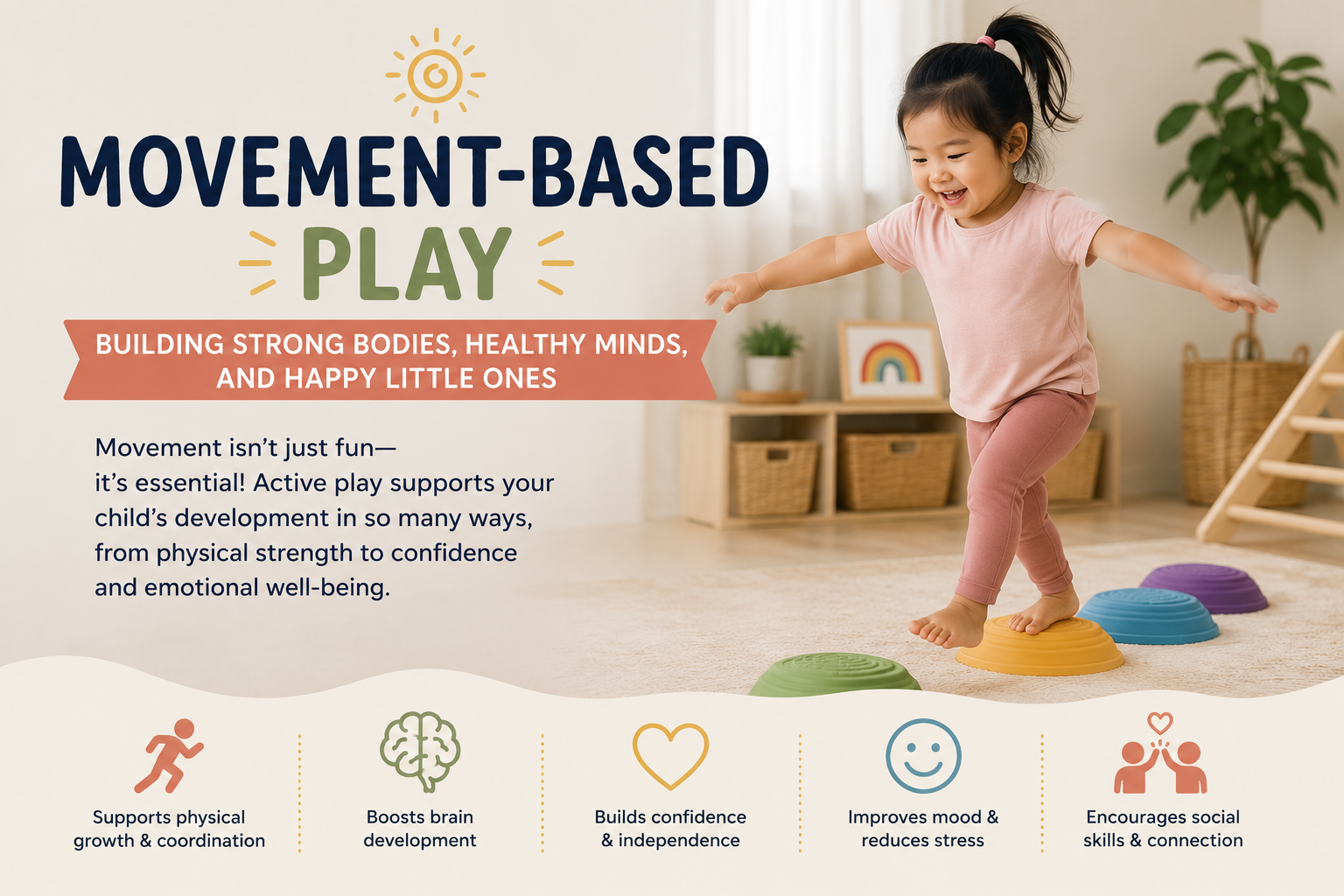
Children were designed to learn through movement-based play, yet they are spending more time sitting, more time on screens, and less time engaging in the kinds of movement their developing brains and bodies actually need. Modern childhood has quietly become much more sedentary.
Why Young Children Need Movement to Learn
Contrary to the mainstream education systems of our modern society, young children do not learn primarily through long periods of sitting still and doing worksheets. The ability to do that only develops later on in childhood.
During the early childhood years especially, when the brain is rapidly developing, they learn better through:
- play
- movement
- sensory exploration
- and hands-on experiences
Multiple areas of the brain activate at once, because of the movement required during these activities.
They are building the neurological foundations needed for:
- attention
- coordination
- problem solving
- spatial awareness
- body awareness
- motor planning
- emotional regulation
- academic readiness
Research consistently shows that movement and learning are deeply connected. Even Maria Montessori, a well-known historical educator, highlighted the importance of movement in education.
But more than that, children often regulate through movement – not away from it.
How Movement Helps the Body and Brain Feel Calm
Children who climb, crawl, spin, jump, balance, push, pull, carry, scoop, or swing, are doing far more than “burning energy.”
It does not automatically mean something is wrong, when a child appears:
- “wild”
- impulsive
- inattentive
- unable to sit still
- constantly moving
- emotionally reactive
Sometimes it’s the nervous system’s way of communicating a need.
Movement can help children to:
- release stress
- improve focus
- regulate emotions
- improve alertness
- organize sensory input
- feel calmer in their bodies
This is one of the reasons many children focus better after active play sessions.
The Link Between Movement and Focus
Young children naturally have shorter attention spans. That is why expecting long periods of sustained focus from toddlers and preschoolers is often unrealistic.
In many cases, movement actually improves concentration, because it helps activate the brain systems involved in:
- attention
- alertness
- self-regulation
- body awareness
- sensory integration
Signs Your Child May Need More Movement-based Play and Sensory Input
Every child is different, but some common signs may include:
- high frustration levels
- appearing “hyper” indoors
- constantly seeking rough play
- difficulty sitting for long periods
- frequent emotional meltdowns
- chewing on clothing or objects
- excessive jumping or climbing
- constantly crashing into furniture
- difficulty transitioning between tasks
- trouble focusing during seated activities
These behaviors are not always signs of defiance, but rather signs that the nervous system is seeking regulation.
Practical Movement-based Play Activities That Support Regulation and Learning
The good news is that children do not need expensive equipment or perfectly curated activities. By providing simple movement opportunities throughout the day, you can make a meaningful difference.
Indoor Movement Ideas

Busy Bodies Calm Minds –
Movement Booklet
by BusyLittleHands.studio
for FREE today!
- pillow obstacle courses
- yoga/Pilates for kids
- balancing games
- jumping games
- dance breaks
- animal walks
- hallway races
- bean bag toss
- scavenger hunts
- carrying household items
Outdoor Movement Ideas

- climbing
- swinging
- digging
- biking
- gardening
- sandbox play
- nature walks
- running games
- jumping in puddles
- pushing wheelbarrows
Sensory Play Ideas

- sponge squeezing
- kinetic sand
- water play
- play dough
- sensory bins
- finger painting
- pouring activities
- scooping dry rice or beans
What Is “Heavy Work” and Why Does It Help?
“Heavy work” is actually a term used in Occupational Therapy and refers to activities that engage the muscles and joints through pushing, pulling, lifting, carrying, climbing, or resistance. As a result, these activities provide powerful sensory input to the nervous system.
Heavy work can help children to feel:
- calmer
- more focused
- more grounded
- more organized
- emotionally regulated
Examples of heavy work activities include:
- carrying books
- pushing laundry baskets
- doing animal walks
- climbing playground equipment
- digging in sand
- helping carry groceries
- pulling wagons
- crashing into cushions
- wheelbarrow walks
- scooping sensory materials
Final Thoughts
If your child struggles with focus, emotional regulation, or constant restlessness, you are not alone.
Often, children are communicating developmental and sensory needs through their behavior. When we as parents better understand the nervous system, movement, and play-based development, we can support our children with more compassion and less pressure.
That is why small changes can make a meaningful difference.
Just add more movement, more play, more connection, and more realistic expectations to their days.
🧮 Play. 💡 Learn. 🌱 Grow.

References
Movement in learning | Education | Research Starters | EBSCO Research
Why Movement is So Important for Children’s Development – Maria Montessori Institute
What is Heavy Work and Why is it Important for My Child? – Associates in Pediatric Therapy

Written by Elsabé — mother of four (including twins) and passionate advocate for early childhood development, with 20+ years of hands-on experience supporting children’s growth and development in home and school-based settings. You can find more of her work over at BusyLittleHands.studio