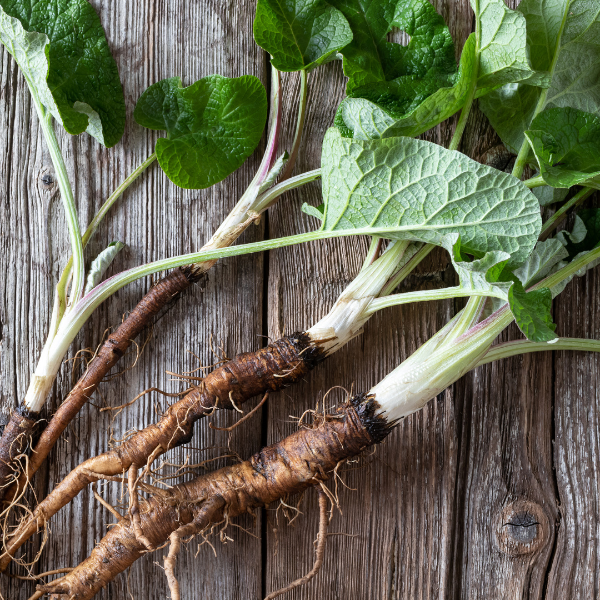
If you’re breastfeeding and considering trying burdock root—perhaps you saw it in a detox tea or someone recommended it to boost your milk supply—you may be wondering: Is this actually safe while nursing?
You’re not alone in asking. A lot of new moms look for natural ways to feel better, support their recovery, or keep up energy levels.
Let’s break it down together so you can make an informed decision that feels right for you and your baby.
What Is Burdock Root?
Burdock root (from a plant called Arctium lappa) is a perennial plant that’s been used for centuries in traditional medicine for its detoxifying and cleansing properties. It’s commonly used to support the blood and lymphatic systems, promote healthy skin, and treat chronic conditions like diabetes or even cancer, though research is still emerging on those claims.
The root itself contains powerful antioxidants like phenolic acids, quercetin, and luteolin. You might see it in teas, tinctures, or capsule supplements, but in Japan and parts of Asia, it’s also eaten as a food—think of it like a crunchy, slightly sweet vegetable, similar to lotus root or celeriac.

What We Know About Burdock Root And Breastfeeding
Here’s the thing: while there’s not a lot of in-depth research focused specifically on breastfeeding, burdock root is now considered fairly safe when used in moderation—especially as a food. Still, most health experts advise being more cautious with concentrated forms like powders or tinctures, since those haven’t been well studied.
Expert Safety Ratings And Cultural Use of Burdock Root While Breastfeeding
- The DrLact database, which evaluates substances for breastfeeding safety, gives edible burdock root a 3 out of 8, classifying it as low risk. That means while minor side effects might occur in some breastfed babies, most studies suggest it’s likely safe in moderate amounts.
- In Japanese diets, burdock root is commonly consumed as a vegetable, and it’s generally considered safe during pregnancy and breastfeeding in food amounts.
- Sources like E-Lactancia place burdock root in the “fairly safe” category—with caution around higher-dose herbal products, not food-level use.
Bottom line? If you’re enjoying it occasionally as food, it’s probably fine. For regular use—especially in tea or supplement form—it’s still smart to check with your doctor or lactation consultant first, just to be safe.
Potential Risks To Keep In Mind
Even though edible burdock root has a low-risk safety rating, there are a few things to keep in mind:
- Allergy potential: Burdock belongs to the same family as ragweed, daisies, and marigolds. If you or your baby has plant allergies, there could be a risk.
- Possible dehydration: Burdock acts as a mild diuretic, meaning it helps your body shed water. If you’re not staying well hydrated, that could affect your milk supply.
- Dose matters: Fresh root in soup? That’s fine. A super-concentrated tincture every day? That’s more of a grey area.
- Baby’s response: Every baby is different. If you notice fussiness, rash, or feeding issues after eating burdock, it’s worth pausing and checking in with your provider.
Safer Alternatives You Can Try
If you were drawn to burdock root for energy, detox, or milk supply, there are other options that are generally safer during breastfeeding:
- For energy: Focus on balanced meals, staying hydrated, and rest when you can (easier said than done, we know). Some moms find that B-complex vitamins or iron supplements help, especially if they’re low in those nutrients.
- For milk supply: Fenugreek and blessed thistle are better-studied herbs, but even those come with pros and cons. Always talk to a lactation consultant before starting any supplement.
- For general wellness: Foods like oatmeal, leafy greens, and whole grains support your body without the risks tied to less-researched herbs.
The Bottom Line
You want to do what’s best for your baby—and for yourself. That means being thoughtful about herbs like burdock root while you’re breastfeeding. It’s considered fairly safe in moderation—especially when eaten as food—but higher-dose products still haven’t been well studied.
If you’re thinking about trying it, talk to your healthcare provider or a certified lactation consultant first. And remember: you’re doing a great job navigating all this. There’s no perfect answer to every question, but you’re asking the right ones. That matters more than you know.
Resources
- Find a breastfeeding support group near you.
- Milkology Breastfeeding Class – Affordable, video-based online course to help you master breastfeeding at your own pace.
References
- Arctium Lappa (Burdock) Safety Score — DrLact (Version 1.2). DrLact assigns edible burdock root a 3 out of 8, categorizing it as low risk for lactating mothers. This score is based on published studies, case reports, and known pharmacokinetics.
- Burdock Root: Everything You Need to Know — Verywell Health. Provides a thorough overview of burdock root, including its antioxidant properties and traditional uses. Notes caution for use during pregnancy and breastfeeding due to limited safety data.
- Burdock – Uses, Side Effects, and More — WebMD. Summarizes the lack of reliable information on the safety of burdock during pregnancy and lactation. Useful for highlighting the need for medical guidance when using herbal supplements.
